- Review
- Best
- Tankless
- Tank-type
- Heat Pumps (Hybrids)
- RV Water Heaters
- Gas
- Electric
- Pool Heaters
- Solar
- Bosch
- Navien
- Noritz
- Paloma
- Rinnai
- Takagi
- American
- AO Smith
- Bradford White
- GE
- John Wood
- Reliance
- Rheem
- Richmond
- Ruud
- State
- US Craftmaster
- Hydronic Heating
- Troubleshooting
- Maintenance
- Parts
- Buy on amazon
- Sitemap
- What's New
- Privacy
- Disclaimer
- Contact
Direct Vent Water Heaters, Buying Guide and Installation Tips
Explore direct vent water heaters, how they work, review of the main features and top models, buying and installation tips. Review of the best direct models from the manufacturers: Rheem, AO Smith, and Bradford White.
Need professional help with your water heater?
Get free quotes today!
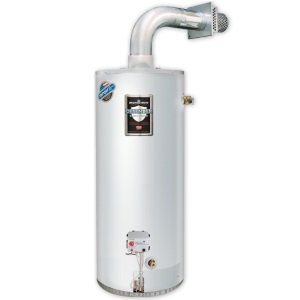 Bradford White
As the water heating energy use accounts for about 20% and with the higher fuel prices today, buying the best direct-vent water heater for your home requires some research and knowledge.
It is important to know how direct vent water heaters work, what the main parts are, installation requirements, also service and maintenance costs.
Either buying a direct vent water heater (DV) for the new or old house, the proper location and venting should be considered, no matter of the fuel type or unit type.
If buying an electric type, you don't have to worry about venting, combustion gases, and additional expenses.
Venting types
If buying a tank-type water heater, you have to choose one of four venting types; standard or atmospheric, direct vent, power vent, or power-direct vent. Either one you choose, keep in mind that every single one requires a venting system to remove the flue gases and the fresh air for gas combustion.
Selecting the right type depends on the water heater location, installation requirements, and local building codes.
The atmospheric type is the most common, cheapest to buy and simplest to install. It uses the vertical metal vent pipe or a chimney where the flue gases are naturally moved from the unit and up, through the vent and outside, thanks to the temperature difference (hot air tends to go up).
The power-vent water heater (PV) uses the power blower to move the exhaust gases outside the house, using the PVC, CPVC, or ABS pipes. These units are expensive but most efficient that provide great flexibility in installation.
The power-direct vent models are the combination of power and direct vent models, where the blower is used to remove the gases outside. It is used when the external wall is away from the water heater, requiring longer pipes.
Direct vs. atmospheric vs. power venting
Direct vent water heaters require plenty of fresh air for the heater's proper combustion and ignition. The combustion air mostly comes from the outside through the venting pipe.
Direct vent water heater utilizes a sealed combustion chamber which ensures safe transfer of products of combustion, through the horizontal pipe and external wall. A second pipe, also airtight, is used to draw the fresh air in.
Direct vent setup solves two problems, found on atmospheric models; backdrafting and negative pressure inside the room where the unit is installed.
A DV system is much quieter than the PV system as it doesn't have the electric blower but is more expensive than the standard type.
Note: For the correct venting, venting pipes have to be installed per local codes and manufacturer's instructions.
Direct vent water heater - Buying tips
No chimney needed
If there is no chimney in the house or none close to the heater, or if there is no electrical source, buy a direct vent water heater (DV). Since it does not require electricity, you will have hot water even during the power outages.
If the electricity is not an issue you can still go with the advanced direct models that use the electric blower for the exhaust. These are called power-direct vent models.
Direct venting is also better than the power venting as there will be no pilot outages due to the air pressure changes.
Direct vent gas water heaters are designed with a sealed combustion chamber that is airtight, so back-drafting will not occur. They are silent, as there is no fan to blow, and safe, so the installation and venting won't be a problem. There is no risk of the Carbon Monoxide leaking and insufficient indoor ventilation, so they can be installed virtually anywhere as long as there is an outside wall and as they draw the fresh air in from the outside.
Application
Some types of DV heaters can be installed close to an outside wall, while others further away, it depends on the recommended pipe length.
Direct venting is found in both tank-type and tankless units.
Safety
A direct vent water heater is safe because of the sealed combustion chamber that prevents the fumes from going back into the house. The unit always works with the outside fresh air, so no air from the inside of the house is used.
Easy installation
Direct vent water heater is mainly equipped with the steel pipes, but can also use PVC, CPVC, or ABS pipes for an easy and economical installation. The pipes can be installed either horizontally or vertically, but it depends on the installation requirements.
When using the vertical pipes and as the heated warm/hot exhaust fumes are lighter than the cool air, products of combustion are moved up and out, naturally.
In the case of the horizontal pipes, the sealed combustion chamber is what helps in the extraction of the products of combustion and air intake. Venting should be as direct as possible with a minimum number of turns and pipe fittings. It allows installation in smaller spaces.
In order to prevent blockage, condensate, or vapor that creates a nuisance or hazard, property damage, or damage to the parts and affect proper water heater operation, the vent system must terminate with the proper clearances and per local codes.
Note: During installation, all vent-air intake joints should be sealed (sealant is usually provided).
Popular direct vent water heater manufacturers
Almost every manufacturer in the US and Canada makes the gas water heaters with the direct venting. Most of the units are not Energy Star compliant due to the low energy factor.
Rheem
Rheem, the manufacturer of popular water heaters, produces several types of direct vent heaters that are use the coaxial vent for easier installation in residential and manufactured homes:
Rheem direct vent water heaters are designed with the horizontal venting option only and in two sizes; 40 and 50 gallons. The adjustable coaxial vent provides flexibility in installation as it can swivel 360 degrees. The horizontal and vertical kits are available for longer venting, up to 48" max. For the corrosion protection, models use the Rheemglas tank lining and premium anode rod, also the EverKleen system for sediment build-up reduction.
Model PROG50-36N RH60 DV is the 50-gal unit that comes from the Professional Classic series. It provides the Recovery Rate of 36.5 GPH, First Hour Delivery of 50 GPH and energy factor of 0.51.
A model with better specs is the XG50T06DV36U0, a 50-gal unit from the Performance series with the Recovery Rate of 36.4 GPH, First Hour Rating of 78 GPH and energy factor of 0.63.
AO Smith
AO Smith water heaters with the direct venting are found in a greater number of models than Rheem. They come in natural gas and propane while utilizing a low NOx gas burner, and have a standard 6-year warranty. No electricity is needed for its work. These models are not Energy Star.DV models are also available for the manufactured housings.
Model GDVT-50 is the best direct vent water heater from AO Smith. This 50-gal unit comes with the 47,000 BTU gas burner providing energy factor of 0.65, First Hour Rating of 83 GPH and Recovery Rate of 51 GPH.
Model GDV-50 has a weaker gas burner with the power of 40,000 BTU, which delivers lower FHR of 77 GPH and RR of 43 GPH. The EF is slightly higher, it is 0.66.
Bradford White
Defender Safety System DS models utilize a coaxial vent pipe that is used in homes and rooms where the sufficient air for gas combustion cannot be provided. The pipe can rotate for more flexibility. Telescoping vent kits allow up to 8 feet in lengths while the flexible vent kits up to 100".
Defender Safety System High Input DH models, as the above models, do not require electricity; they utilize co-axial direct vent system with the same length capability, but offer greater recovery, have bigger tanks (up to 75 gallons) and provide side connections for space heating.
Required tools for installation
- Direct venting kit
- Adjustable wrench
- Drill
- Saw
- Screwdriver
- Level
- Pliers
- Multimeter
- PVC tube cutter
- Caulk gun
- Electric wire
Conclusion: As with all venting types, direct venting must be installed per codes and professionally so ti can provide safe and efficient operation. Since the blower is not used, the vent pipe must provide a clear path, with no obstructions. The DV type is recommended for residential homes that do not have access to the chimney or is far away from the water heater, or electrical plug is not nearby.
- Home
- Water heater review
- Direct Vent Water Heaters

Popular Articles