- Review
- Best
- Tankless
- Tank-type
- Heat Pumps (Hybrids)
- RV Water Heaters
- Gas
- Electric
- Pool Heaters
- Solar
- Bosch
- Navien
- Noritz
- Paloma
- Rinnai
- Takagi
- American
- AO Smith
- Bradford White
- GE
- John Wood
- Reliance
- Rheem
- Richmond
- Ruud
- State
- US Craftmaster
- Hydronic Heating
- Troubleshooting
- Parts
- Buy on amazon
- Sitemap
- What's New
- Privacy
- Disclaimer
- Contact
Hot Water Heater Maintenance Guide
DIY Maintaining Tips
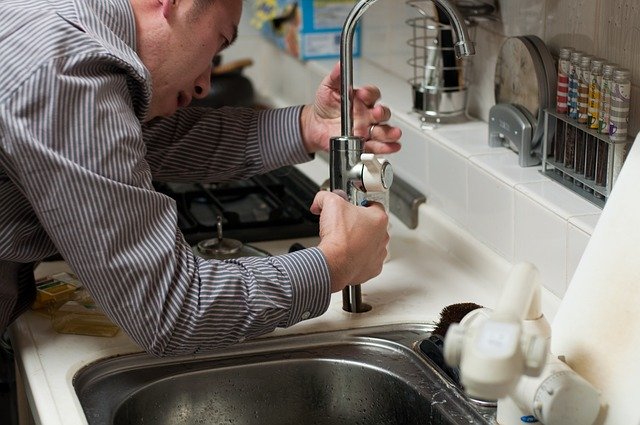 Image by fran1 from Pixabay
Check out how proper gas water heater maintenance increases performance, efficiency, and longevity. Can any of the frequent problems be prevented? Maintaining tips and the checklist. Find out which components should be checked and cleaned and how often.
Need professional help with your water heater?
Get free quotes today!
In this article:
- Why water heater maintenance is important
- The checklist and required tools
- How to check a vent system
- How to maintain a pilot light
- Maintaining a gas burner
- Anode rod and how to check it
- TPR valve and how to test it
- Checking the dip tube
- Draining as prevention
- Winter maintenance
- Safety inspection
Why periodic maintenance is important
Regular hot water heater maintenance is necessary as the not-maintained heating unit will generate more problems and fail more often. Such heaters won't perform as expected, would cost more to operate, do not last as long, and increase the health risk due to the escaped flue gases and carbon monoxide poisoning.
In some installations and due to the operating conditions and unit’s “abuse,” it is even recommended to perform frequent maintenance.
Either you own a gas or electric water heater that was recently purchased and installed, or it is a few years old, the following problems can be prevented with regular maintenance:
- Leaky temperature and pressure relief valve
- Smelly water due to deteriorated anode rod
- Rusty/brown water
- Noisy operation
- Not enough hot water
- No hot water
- Sediment buildup
- The pilot light goes out or doesn’t want to turn on
- Cannot light the gas burner
Maintaining a water heater is a simple but important DIY project requiring no special skills or tools. This is a very useful operation so your hot water heater can perform like new, keeping the efficiency high and provide years of safe, worry-free, and reliable work.
Note: If you are not comfortable working on a gas or electric heater, always contact a professional technician (here is how).
What is the cost of the maintenance?
If you plan to take care of your unit and have all the necessary tools and material, it will cost you only your time, but if planning to call a technician, the labor price will depend on the region and what needs to be done on the unit. The more complex work is, the higher cost.
Maintenance checklist
This article explains how to keep the water heater in good shape and what kind of problems can occur if you don't. Here is the checklist of what needs to be inspected and cleaned regularly, considering the manufacturer's recommendations for a specific component.
- Venting system
- Gas burner
- Anode rod
- TPR valve
- Dip tube
We recommend using the manufacturer's instructions as it contains all the necessary information for the correct installation, operation, and maintenance of the gas and electric water heaters.
Required tools
- Adjustable wrench
- Multi-meter
- Screwdrivers
- Shop-vac
- Sandpaper
- Brush
- Bucket
- Garden hose
- Teflon tape
Note: Make sure to turn off the power (gas and electricity), including the water supply.
Venting system - Why and how to maintain it
You should inspect the venting system annually, at least once, to prevent potential carbon monoxide gas leaking and breathing hazard. During this regular gas heater maintenance, you should look for and check the following:
- Are venting pipes properly connected to prevent gases from escaping?
- Are there any obstructions that might affect proper venting of the flue gases and air draw for gas combustion?
- Check if the proper clearances are maintained from combustible materials and for adequate venting.
- Damaged, sooted, or deteriorated flue pipe as it can cause the leakage of products of combustion and improper venting.
- Rusted flakes at the top of the heater.
- Remove any corrosive chemicals like waxes, bleach, spray can propellants, cleaning solvents, or swimming pool chemicals located in the same room as a water heater. Chemical corrosion of the venting system can be very dangerous.
Note: Make sure to clean, repair or replace the venting system before resuming the operation of the gas water heater.
Gas pilot burner - How to maintain it properly
Preventive water heater maintenance like visual inspection of the main burner and pilot burner should be done at least once a year. The thermocouple, which is part of the assembly, must be checked and cleaned regularly.

Gas burner – What to check
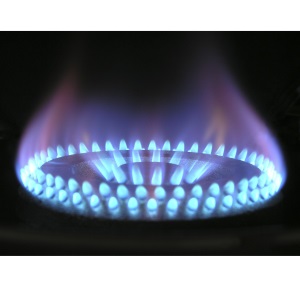 Image by Magnascan from Pixabay
- Check for any obstructions at the bottom of the water heater and in the area where the air intake opening is located.
- Inspect the air intake screen (some models) and clean the accumulated lint, dust, or oil.
- Clean the orifices and related parts of any dirt and other foreign material.
- Use the wire brush and clean the combustion chamber to remove the scale deposits and debris.
- Check if any products like gasoline, adhesives, or solvents with potentially flammable vapor are present in the same room and remove them.
- Check for sooting as it might impair normal combustion (The fine black particles resulting from the incomplete combustion).
If the gas burner needs cleaning, always put the gas control knob to the "OFF" position and remove it from the combustion chamber.
The gas burner must get sufficient airflow for the proper combustion. Any irregularities can lead to an unstable flame and flame changing its color to yellow (light blue is perfect), pilot outage, sooting, also lower efficiency, element damage, and carbon monoxide leak. Observe the gas burner operation through the opening at the bottom. Cleaning should be done yearly.
How to maintain an anode rod

Keep in mind that the anode rod, often called a sacrificial anode, is consumed over time. If your water heater has more than one anode, you should inspect every single one. The anodes are installed on the top of the heater and submerged in the water.
Some manufacturers recommend frequent inspection – at least once a year, but it depends on water quality, like hardness and water softener usage.
If during the regular water heater maintenance, you notice that the steel core is exposed more than 6" either from the bottom or the top, if the middle of the rod is exposed or if the diameter is less than half the original size, it is time to replace the anode rod.
TPR valve maintenance
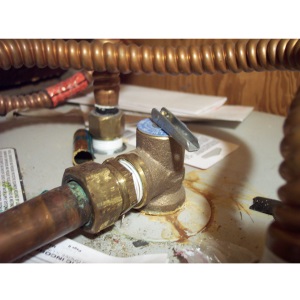 TPR valve (photo: wikimedia.org)
Schedule the maintenance of the temperature and pressure relief valve (TPR) at least once a year. The recommendation is to check that the valve operates freely and has not become encrusted with the lime. If water is leaking, replace the TPR valve.
Lift the valve lever gently and release it; the lever should return to its normal closed position. If it doesn't return, lift the TPR valve lever several times until the valve seats properly without leaking. Keep in mind that any released water is very hot. Use a bucket to catch any released water.
If you have a closed water supply system and see periodic discharges on the TPR valve due to the thermal expansion, proper action has to be taken.
Note: The TPR valve, as the safety device, is very important because if it doesn’t work, the tank can be exposed to extremely high pressure resulting in deformation, rupture, even explosion. It must be replaced if not working.
Check the dip tube

Most of the standard, economy-value water heaters have low-quality dip tubes. The purpose of this element is to run the cold water into the storage tank and reduce the sediment build-up if the more advanced type is installed.
The recommendation is to replace the straight dip tube with the curved type or one with the jet ports, so the turbulent water flow swirls the sediments around and out when flushing. The cross-linked polyethylene dip tube is a good choice.
Depending on the local water quality, low-quality tubes can break and crumble into small pieces, clogging the water filters and other elements. This can further affect normal heating operation, efficiency, and performance.
Draining as regular maintenance to prevent the sediment build-up
Maintenance is also helping users to save energy and reduce energy bills. Since the fuel costs and hot water consumption are constantly increasing, deliming, for example, has become a necessity of modern maintenance. The more you heat more lime comes out.
As the lime-scale prevents normal heat transfer and decreases the efficiency and performance, the recommendation is to remove it by adding chemicals or Delimer solution.
The water heater tank should be drained and flushed out once a year also. By flushing the water heater, sediments that are decreasing the performance and efficiency are removed. Drain a few quarts off the tank, or suggested by the manufacturer, and you may prolong the life of the water heater. The drain valve is located at the bottom of the unit.
Also, make sure to check water connections for leaking and water pressure. The pressure-reducing valve (PRV) should be installed if the water pressure is higher than recommended (working pressure is around 50 psi).
Winter maintenance
It is a good idea to check the temperature settings on the gas control valve during the wintertime. Almost every gas water heater has a thermostat set between 100 F and 140 F. If you have just bought the brand new unit, you will notice that the unit is factory set at the temperature between 120 F and 125 F.
This is where it should be; hot enough for dishes and shower but not too high to produce scalding burns. Also, keep in mind that with every temperature increase of 10 F, there is a 3-5% increase in energy costs.
If the room where the unit is located is cold, and the pipes are exposed to lower temperatures, it is a good idea to insulate them both – an insulation blanket for the tank and foam tubes on the pipes.
Safety inspection
After work has been performed on the water heater, either repair, replacements, maintenance, or a simple cleaning, always check if there is a leak on a water, gas, or gas flue system, and fix it accordingly.
Summary
Regular and correctly performed maintenance on a water heating system is a must, not only because water heaters are expensive to repair, but to ensure reliable and safe operation with the expected performance and efficiency, so hot water is always available when you need it.
The above article was focused only on gas-type heaters, while the guide and tips on cleaning and maintaining electric units can be found here.
Need professional help with your water heater?
Get free quotes today!
Related articles
- How to maintain a tank-type water heater
- Maintaining an electric water heater
- How to drain a water heater
- How to flush a water heater
- How to extend the life of a water heater
- How to winterize a tankless
- Cleaning tips
- How to vent a gas water heater
- How to improve water heater safety at home
- How to prevent water damage and avoid costly repairs
- How to protect a water heater from corrosion
- Home
- Water Heater Maintenance Guide

Popular Articles