- Review
- Best
- Tankless
- Tank-type
- Heat Pumps (Hybrids)
- RV Water Heaters
- Gas
- Electric
- Pool Heaters
- Solar
- Bosch
- Navien
- Noritz
- Paloma
- Rinnai
- Takagi
- American
- AO Smith
- Bradford White
- GE
- John Wood
- Reliance
- Rheem
- Richmond
- Ruud
- State
- US Craftmaster
- Hydronic Heating
- Troubleshooting
- Maintenance
- Parts
- Buy on amazon
- Sitemap
- What's New
- Privacy
- Disclaimer
- Contact
Sizing a Tankless Water Heater
A Guide to Buy the Right Model
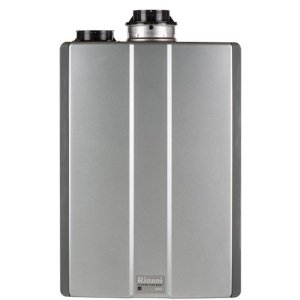
Sizing a tankless water heater is different from sizing tank-type heating appliances. The rule is still the same; you want your tankless unit to provide a sufficient supply of hot water at the minimum comfortable temperature during the peak time of the day.
Need professional help with your water heater?
Get free quotes today!
As suggested when selecting a tank-type heater, you don't want to buy an oversized or undersized tankless water heater, as it will result in unnecessary issues such as the rising upfront price, operating costs, and wasted water, and energy - affecting your budget and time.
To determine which tankless water heater model is right for you and the correct size or capacity you should buy, there are several factors to consider.
Things to consider when sizing
How much water will be required during the busiest usage period or peak time can be determined based on the following factors:
- Size of the household.
- How many bathrooms, tubs, dishwashers, and washers are going to be used? Are you planning any additions in the future?
- Do you have kids or teenagers as hot water usage is increasing with their needs?
- What is the pattern of use?
- Quantity and type of fixtures.
How much hot water is needed per application
Here are the consumption rates as an indication of how much water is required by a particular application. Use it as a reference when sizing a tankless water heater:
- For a shower or bath - around 20 gallons.
- Showers with the energy-efficient shower head - 2.5-3 gal/min.
- Automatic dishwasher needs around 14 gallons or 1.5 GPM.
- Washing machine needs 32 gallons to wash the clothes or 2 GPM.
- For a kitchen sink - 1.5 GPM.
- For shaving - 2 gallons of hot water.
All the above data takes into account an average temperature between 100 and 110 F.
Buy the Best of Rinnai
How to calculate the size of a tankless water heater
To calculate the peak demand for hot water, list the number of devices you are going to use at one time and add up the flow rates. If the tankless unit is used to supply a shower and two sinks at the same time and if we assume that the peak demand for one shower is 2.5 GPM and 0.75 GPM for each sink, your total peak demand for hot water is 4.0 GPM.
Whole-house electric heaters will usually provide 2 to 4 GPM at 75 F temperature rise, while gas type much more. Choose the tankless water heater model closest to the calculated flow rate and temperature rise needs.
Note: Standby heat loss or energy wasted when the hot water is not being used as a significant factor when calculating the tank size, but in the case of tankless water heaters and due to lack of storage tanks, standby heat loss can be eliminated entirely. Tankless models also don't have the first hour rating, as it works instantaneously.

Sizing guides from the manufacturers
Important factors to consider
Multi-system. If the largest tankless water heater available cannot meet all your residential hot water needs, several tankless units can be linked into one system (such as Noritz multi-system with 24 units) to provide enough hot water for every application and any house demand.
Minimum flow rate. As the cold water passes through the heat exchanger, the water flow must have the correct rate to ensure the proper heat transfer. If it is lower than required by the manufacturer, too much heat from the gas burner can affect the proper heat exchanger performance, deform it or shut the unit off.
Many professionals consider the flow rate as the most important factor when sizing a tankless water heater. The flow rate depends upon the temperature of the incoming water. This is why it is beneficial to determine the climate area where you live (use a map below if you live in North America) to find the average groundwater temperature.
For example, Rinnai manufacturer of tankless heaters, recommends that if the groundwater temperature is between 65 and 75 F, you can use model RU90 for 3-4 applications, while during the winter season where the incoming water temperature is between 45 and 55 F, you will use the same model but for two applications instead.
The flow rate can also be determined by calculating the temperature rise. The temperature rise is basically how much you need to heat the water to reach the desired temperature settings (120 F is recommended).
For example, if you set the heater temperature to 120 F and your area's groundwater temperature is 60 F, the difference is 60 F in the temperature rise. The recommendation is to choose a residential tankless heater based on the colder seasons so that you will get the peak demand you need for hot water.
Power. Gas input and heat power from heating elements one tankless unit can provide, including the energy factor (EF), are also important factors when sizing a tankless water heater. For example, Energy Star qualified residential models with an EF of 0.87 or higher to have the maximum gas input of 199,900 BTU/hr. Condensing units usually have an efficiency higher than the above value.
Groundwater temperature chart
Since the temperature of the incoming water varies throughout North America and it fluctuates, there are three climate zones that you have to consider when sizing a tankless water heater:
- Northern zone with an average ground temperature between 37 F and 51 F.
- Central zone with an average ground temperature between 52 F and 61 F.
- Southern zone with an average ground temperature between 62 F and 77 F.
Conclusion
As the tankless unit works on-demand and continuously supplying hot water, the water capacity of the unit is irrelevant when sizing a tankless water heater.
If the tankless unit is not sized correctly, you will have the output temperature the same, but the flow will be affected. Water should be heated to at least 120 F, where the minimum flow rate is usually 2 gallons per minute. If the flow is higher, the temperature is lower.
The suggestion is to calculate all the flow rates from the applications you will use and consider the incoming water temperature. Lower temperature, more BTU you need. If one unit cannot supply enough hot water, two or more models can be installed using the multi-system option.
If you are thinking between gas tankless heaters and electric, it is good to know that gas units can provide hot water at higher flow rates than electric models. Be sure that flow rates will meet the peak demand at the temperature rise you need.
Sizing a tankless water heater is very important because up to 20% of home energy usage goes on water heating. And for the homeowners dealing with the tankless for the first time - benefits of going tankless include the high energy efficiency, low energy consumption, endless hot water heated on demand, space-saving design, reduced pollution, and longevity.
Related articles
- Home
- Tankless water heaters
- Sizing a Tankless Water Heater

Popular Articles